Introduction
Caustic soda also known as sodium hydroxide (NaOH) remains one of the most widely traded industrial chemicals in the world, and tracking the caustic soda price 2026 trend has become essential for procurement teams everywhere. The global market is valued at roughly USD 50-56 billion, with steady growth driven by alumina production, pulp and paper manufacturing, textiles, detergents, and water treatment infrastructure across emerging economies.
For importers, understanding the sodium hydroxide price outlook, and the forces behind it, is no longer optional. Energy costs, regional production shifts, and changing trade patterns all influence how much you’ll pay per ton, and when. This guide breaks down the key forces shaping prices this year, compares the main product grades available to buyers, and highlights emerging caustic soda import opportunities backed by international trade data.
Understanding Caustic Soda Price 2026: Key Market Drivers
Several interconnected factors are shaping prices this year:
Energy costs: Caustic soda is produced through the chlor-alkali process, which is highly energy-intensive — particularly with membrane cell technology, now the dominant production method due to its efficiency advantages over older diaphragm and mercury cell processes. This energy intensity directly affects the sodium hydroxide price in regions with higher electricity costs, especially parts of Europe, where reduced competitiveness has led to plant closures and a shift of supply toward Asia-Pacific producers.
Demand from alumina and aluminum production : Aluminum demand partly fueled by the growth of electric vehicles and renewable energy infrastructurece, ontinues to push alumina refiners to secure long-term caustic soda supply, particularly across Asia. This segment alone accounts for a significant share of global consumption and is one of the strongest demand drivers heading into 2026 and beyond.
Pulp, paper, and water treatment growth: Expanding pulp and paper capacity in emerging markets, combined with growing investment in municipal water treatment infrastructure, is steadily increasing baseline demand — a trend expected to continue through the next decade.
Supply-demand balance and logistics : Global production capacity is forecast to approach close to 99 million tons in 2026, with Asia-Pacific holding the majority share. However, freight rates, container availability, and regional supply disruptions can still cause short-term price swings, especially for buyers relying on liquid caustic soda shipped in bulk.
For buyers, the takeaway is that while the long-term outlook points to steady, moderate growth in both demand and price, short-term volatility is still possible, making supplier relationships and flexible sourcing strategies more valuable than ever.
Liquid vs. Flakes vs. Pearls: Comparing Caustic Soda Flakes Price and Other Grades
One of the most important and often overlooked decisions for importers is choosing the right physical form of caustic soda. Each grade has different cost structures, shipping requirements, and ideal use cases.
Liquid caustic soda (typically supplied at 32% or 50% concentration) often has the lowest sodium hydroxide price on a pure chemical basis, since it requires less processing. However, because roughly half (or more) of the shipped weight is water, transport costs per ton of active NaOH can be significantly higher, especially for buyers located far from production facilities. Liquid caustic soda is generally best suited for large industrial consumers with bulk storage infrastructure (tanks, ISO containers) located relatively close to ports or production hubs. You can review specifications and packaging options on our Caustic Soda Liquid product page.
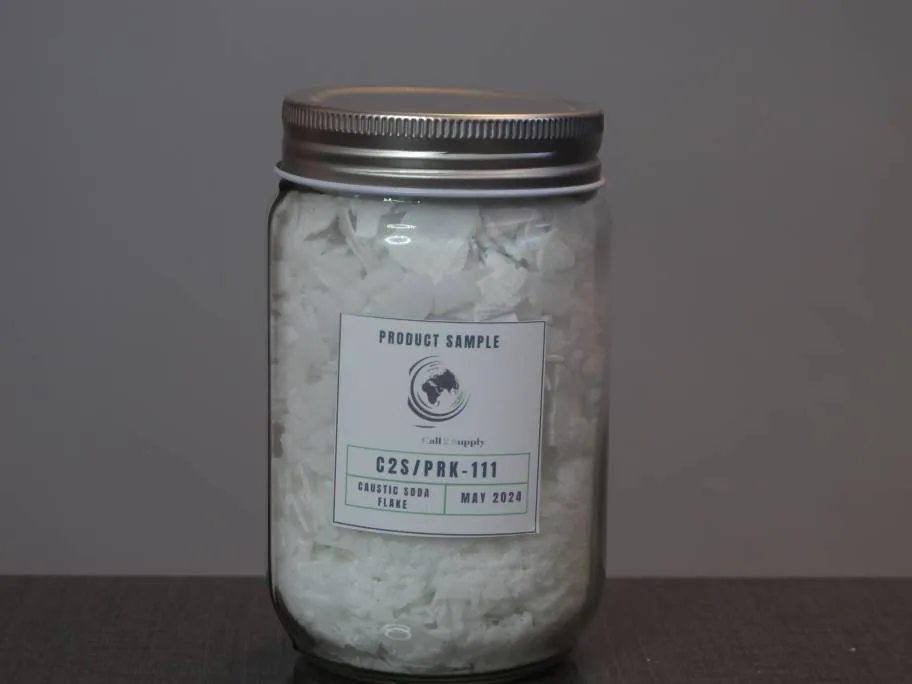
Caustic soda flakes (typically 96-99% concentration) are a popular choice for long-distance export markets. The caustic soda flakes price is often higher per ton than the liquid grade on paper, but because flakes are 96-99% concentrated, buyers receive significantly more active chemical per shipment, which can offset higher freight distances. Flakes are easier to store, handle, and transport in standard packaging (bags, drums, or jumbo bags), making them ideal for markets where bulk liquid handling infrastructure isn’t yet developed. Full specifications are available on our Caustic Soda Flakes product page.
Caustic soda pearls offer similar concentration benefits to flakes, but with a more uniform, dust-reduced form that many buyers prefer for ease of handling, dosing accuracy, and worker safety. Pearls are increasingly favored in applications such as water treatment and certain chemical processing operations where handling characteristics matter. Details can be found on our Caustic Soda Pearls product page.
When comparing caustic soda flakes price against liquid alternatives, importers should weigh total landed cost (chemical price + freight + handling) rather than chemical price alone — along with destination port infrastructure, storage capacity, and end-use application requirements.
Where Is Global Demand Growing? Caustic Soda Import Opportunities for 2026
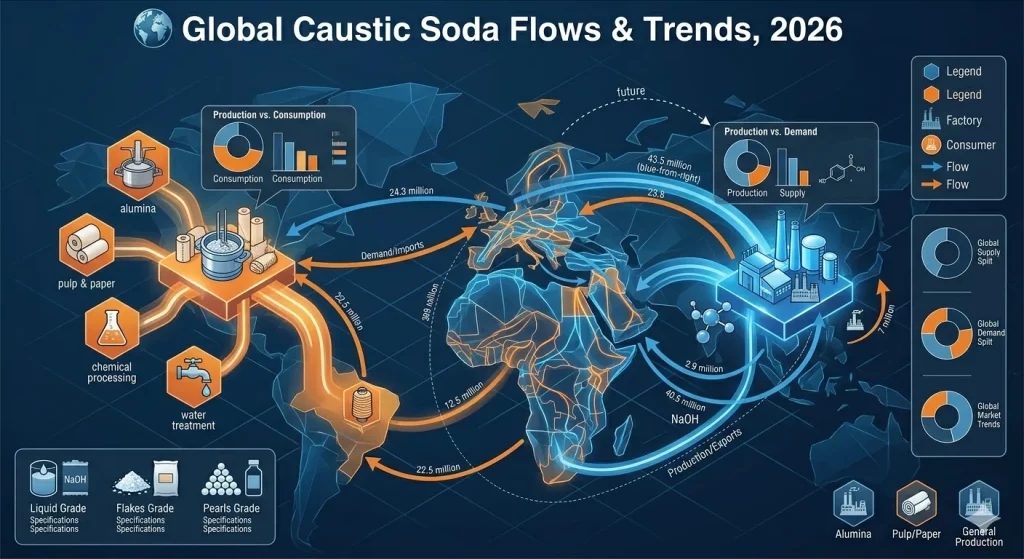
While Asia-Pacific remains the largest caustic soda market by volume, international trade data points to a number of markets where demand is outpacing current supply relationships — creating new caustic soda import opportunities for buyers looking to diversify their sourcing.
According to the International Trade Centre’s Export Potential Map, which analyzes trade gaps for specific products and exporting countries, solid caustic soda (HS code 281511) shows notable “export potential gaps” in a range of markets — meaning current trade volumes remain well below what underlying demand and trade conditions could support. Markets identified through this type of analysis include countries across Central Asia, the Middle East, South Asia, and Sub-Saharan Africa, where industrialization, infrastructure development, and growth in water treatment, textiles, and detergent manufacturing are driving steady increases in caustic soda consumption.
For buyers considering new caustic soda import routes in these regions, this trend often translates into a few practical realities:
- Limited established supply chains mean longer lead times or higher prices when relying on a small pool of existing suppliers.
- Growing local industries (textiles, soap and detergent manufacturing, water utilities) are creating new, recurring demand for both liquid and solid caustic soda grades.
- Diversifying caustic soda suppliers — including sourcing from established chlor-alkali producers in the Middle East — can help buyers secure more competitive pricing and more reliable supply.
Iran has long been one of the established producers in the region’s chlor-alkali industry, with consistent export capacity for both liquid and solid caustic soda grades. For buyers exploring caustic soda import options from this region, our article on Iran Caustic Soda Flakes covers production capacity, typical specifications, and export logistics in more detail
How to Choose Reliable Caustic Soda Suppliers in 2026
Beyond price, importers should evaluate caustic soda suppliers across several dimensions to avoid costly delays or quality issues:
Product specifications and documentation : Always request a Certificate of Analysis (COA), Safety Data Sheet (MSDS). Concentration, purity, and impurity levels (such as chloride or iron content) can vary between suppliers and affect suitability for sensitive applications.
Packaging matched to your logistics : Make sure your supplier can match packaging to your port handling capabilities and onward transport.
Production and export track record : Reliable caustic soda suppliers with an established export history are more likely to navigate documentation, customs, and shipping schedules smoothly — reducing the risk of delays at your destination port.
Pricing transparency and Incoterms flexibility : Ask for clear pricing under multiple Incoterms (FOB, CFR) so you can compare offers on a true landed-cost basis, factoring in your own freight arrangements.
Responsiveness and communication : In a market where prices can shift week to week based on energy costs and regional supply changes, the best caustic soda suppliers provide timely quotes and analysis; which can make a meaningful difference to your procurement timing.
Caustic Soda Price 2026 Outlook for the Rest of the Year
Looking at the remainder of the year, the price outlook points to continued, moderate growth in both demand and pricing, with the global market expected to grow at a compound annual rate in the range of roughly 3-6% over the coming years, depending on the specific segment and region. Asia-Pacific is expected to remain the dominant region by both production and consumption, while European producers continue to face pressure from higher energy costs, potentially tightening supply from that region.
For buyers, this environment suggests a few practical strategies:
- Avoid relying solely on spot purchases if your consumption is predictable — locking in supply agreements can help smooth out short-term price volatility.
- Build relationships with more than one supplier or region, particularly if you’re sourcing from areas where logistics or capacity constraints could affect delivery timelines.
- Request regular price updates from your suppliers rather than negotiating from scratch each time — markets with energy-driven cost components can move faster than quarterly pricing cycles.
FAQ: Caustic Soda Price 2026, Imports, and Suppliers
What factors most affect caustic soda price 2026? Energy costs (especially electricity used in the chlor-alkali production process), demand from alumina and aluminum production, regional supply capacity changes, and freight/logistics costs are the main drivers of price movement this year.
Is liquid or solid (flakes/pearls) caustic soda cheaper to import? It depends on your location and volume. The sodium hydroxide price for liquid grades is often lower per ton on a chemical basis, but higher transport costs due to water content can offset this. The caustic soda flakes price, while higher per ton, often delivers more active chemical per shipment — making flakes more cost-effective for long-distance imports.
Which regions offer the best caustic soda import opportunities in 2026? International trade data indicates growing demand and export potential gaps across parts of Central Asia, the Middle East, South Asia, and Sub-Saharan Africa — regions where local industrial growth is outpacing established supply relationships.
How can I find reliable caustic soda suppliers for an accurate quote? Because prices can fluctuate based on energy costs and regional supply conditions, it’s best to request a current quote directly from a supplier with export experience, specifying your required grade, packaging, quantity, and destination port.
About Call2Supply & Get Your Price Analysis
Call2Supply is a chemical trading and export company specializing in caustic soda — including liquid, flakes, and pearl grades — and is among the caustic soda suppliers serving industrial buyers worldwide. With consistent supply capacity and export experience across multiple regions, we work directly with importers to provide up-to-date specifications, packaging options, and pricing tailored to their destination and volume requirements.
Looking for current pricing or a tailored analysis for your market? Message us on WhatsApp with your product requirements (grade, packaging, quantity, and destination port), and our team will send you a detailed product and price analysis.
Whether you need a one-time quote or a long-term supply partner, staying informed on price trends and working with experienced caustic soda suppliers can make a significant difference to your bottom line.