Introduction: Reframing Trade with Iran in a Transitional Phase
Recent geopolitical tensions in the region have led many international companies to reassess their engagement with Iran. While headlines often emphasize disruption, the on-the-ground reality is more nuanced and requires a deeper understanding of how Iran trade actually functions in practice.
Trade with Iran has not stopped; it has evolved. In fact, Iran trade today is less about traditional models and more about flexibility, adaptation, and strategic execution. Companies that continue to succeed are not those who ignore the risks, but those who actively redesign their approach to trade with Iran.
For companies that have historically worked with Iran as buyers, suppliers, logistics partners, or transit stakeholders, the current environment represents a phase of transition rather than decline. Established trade flows are being restructured, new routes are emerging, and more adaptive supply chain models are replacing rigid, traditional systems. This transformation is at the core of modern Iran trade, where resilience is becoming more important than efficiency alone.
For international partners willing to adjust their approach, Iran continues to offer a combination of strong industrial demand, strategic geographic positioning, and access to regional markets. From a structural perspective, Iran trade remains highly relevant due to the country’s location at the intersection of major regional corridors. Understanding how Iran trade is evolving is essential for companies that want to maintain or expand their presence in this market.
Understanding Iran’s Ongoing Industrial Demand
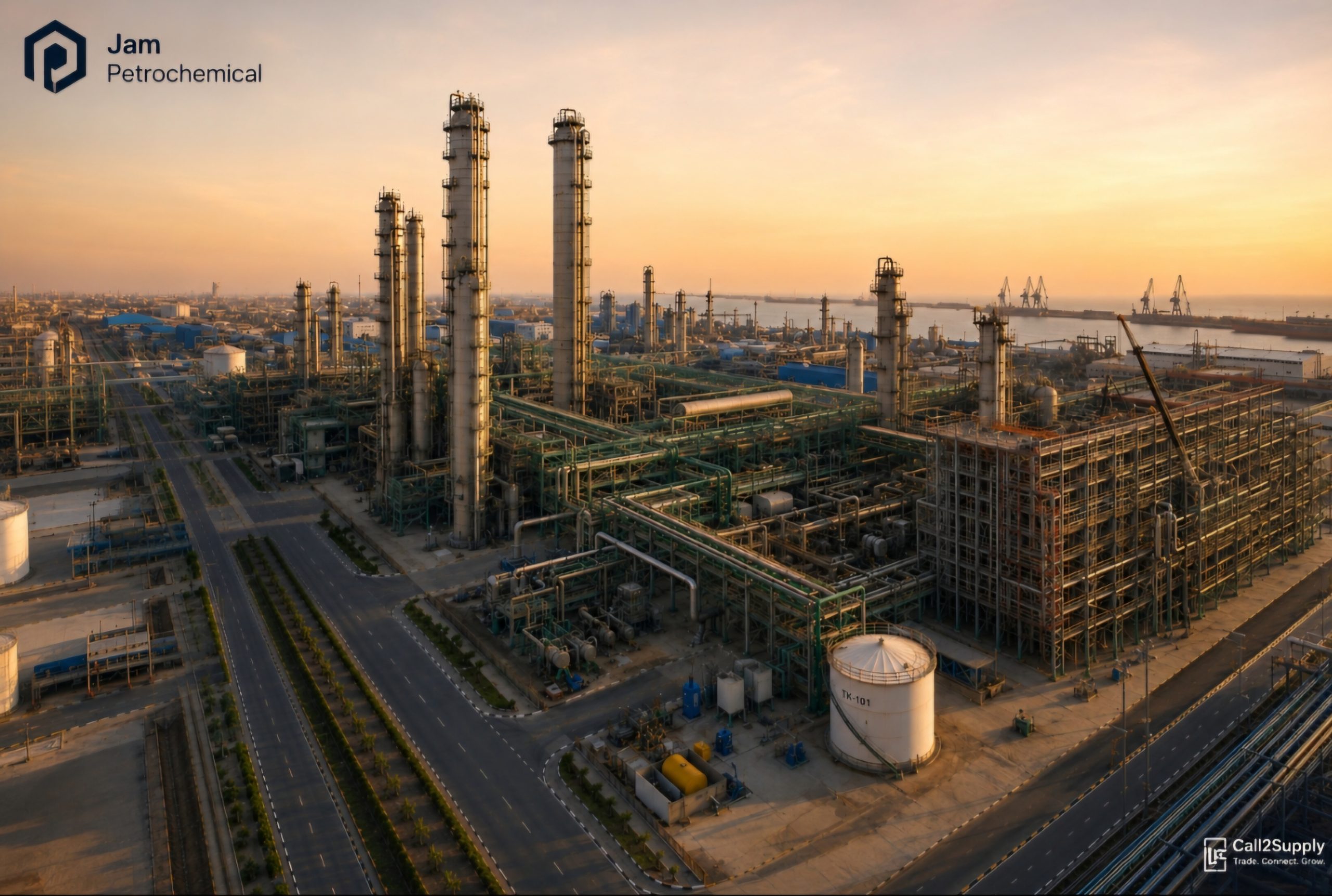
Despite external pressures, Iran remains one of the largest industrial economies in the region, with a diverse manufacturing base and a continuous need for raw materials, intermediates, and technical inputs. This ongoing demand is one of the main reasons why Iran trade continues to function at a meaningful scale.
Several sectors stand out in terms of consistent demand:
- Steel and metal industries, requiring alloys, additives, and production inputs
- Downstream petrochemicals, including polymers and chemical derivatives
- Industrial raw materials, such as minerals and processing agents
- Food and agricultural supply chains, particularly inputs dependent on imports
In many of these sectors, domestic production alone cannot fully meet demand. This creates ongoing opportunities for international suppliers who are actively involved in trade with Iran or supporting Iran export flows. Companies that understand the real demand drivers behind Iran trade are better positioned to offer value rather than compete only on price.
Importantly, Iranian buyers are increasingly prioritizing long-term partnerships over spot transactions, favoring suppliers who understand the complexities of the market. This shift reflects a broader evolution in the Iran supply chain, where stability and reliability are becoming key decision factors. As a result, Iran trade is gradually moving toward relationship-based models rather than transactional engagements.
Export from Iran: Continuity Through Adaptation
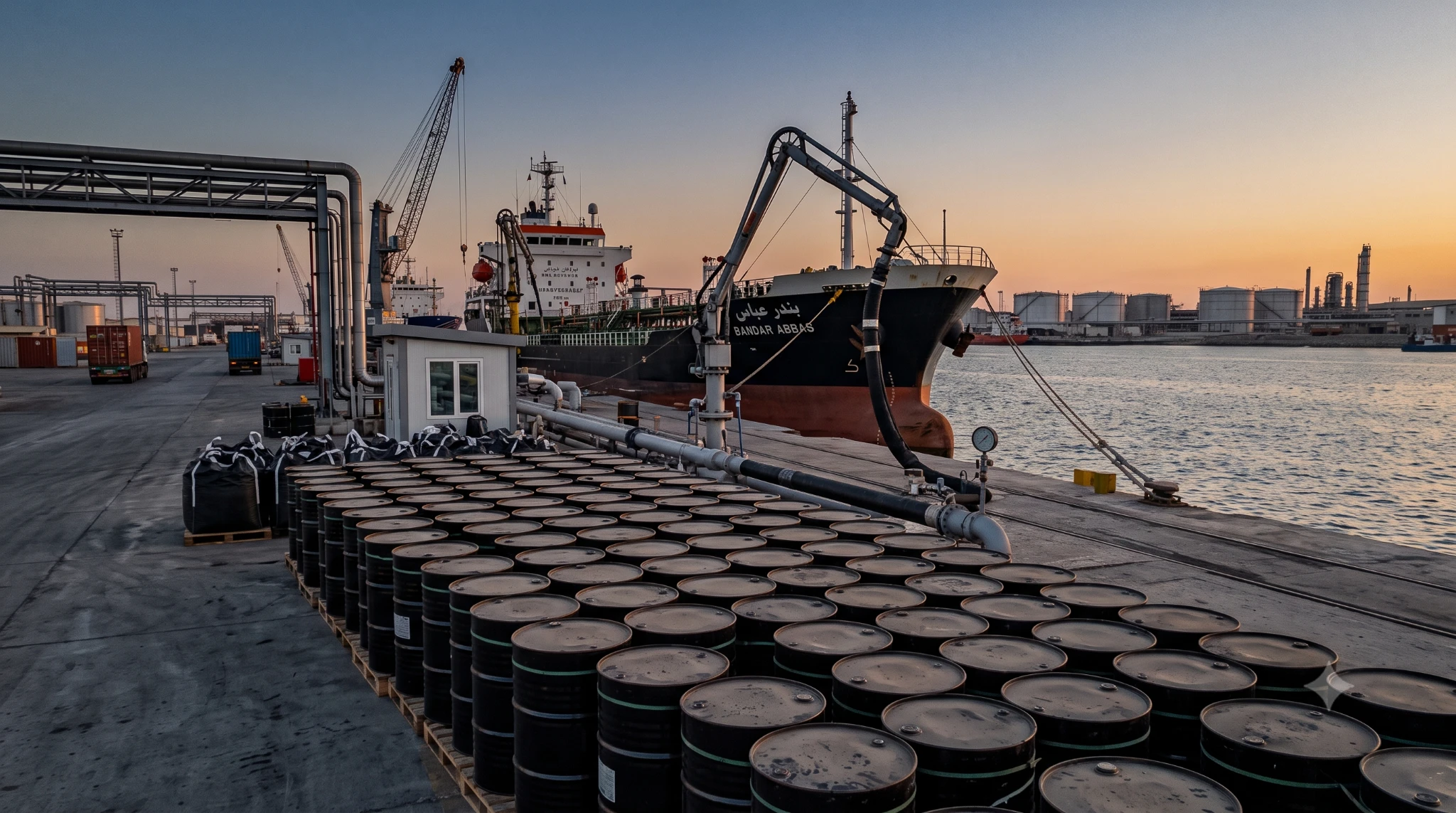
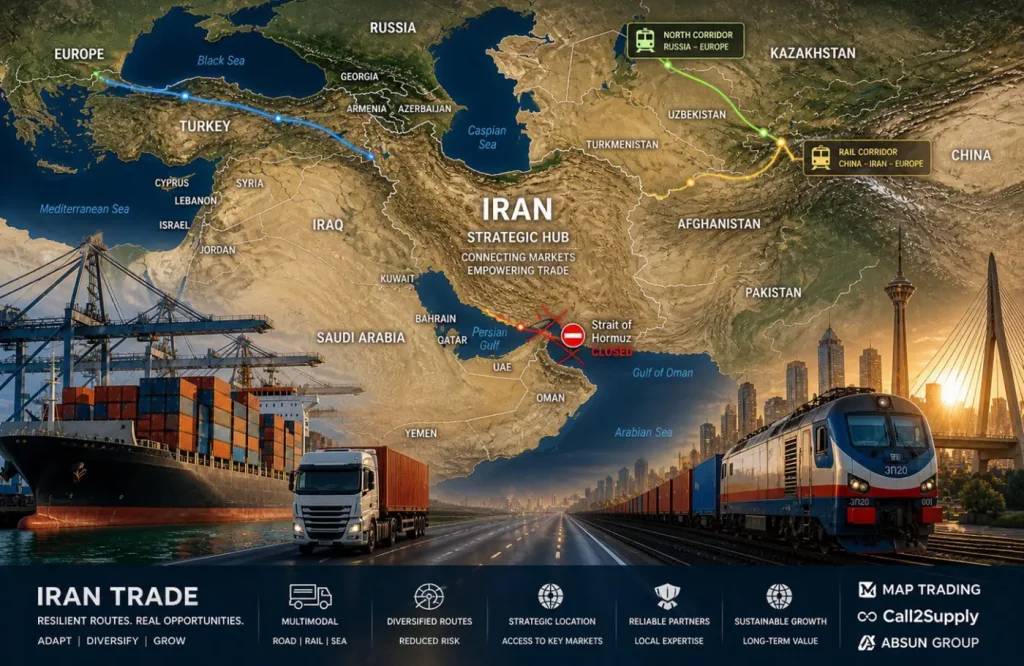
One of the most common concerns among international buyers is whether exports from Iran can continue reliably, especially given sensitivities around maritime routes such as the Strait of Hormuz. This concern directly impacts how companies evaluate Iran export opportunities.
In practice, exports are continuing—but through a more diversified and adaptive iran logistic framework. Modern Iran trade is no longer dependent on a single route or channel.
Rather than relying solely on traditional shipping lanes, exporters are increasingly using:
- Overland trucking routes via Turkey, connecting to European markets
- Rail corridors through Central Asia, linking to China and neighboring regions
- Northern routes via Russia and the Caspian Sea, offering alternative access points
- Regional ports outside high-risk zones
- Multimodal transport solutions, combining sea, rail, and road
This shift has reduced dependency on any single route and improved overall supply chain resilience. The rise of multimodal iran logistic solutions is one of the most important developments in Iran trade, allowing companies to maintain continuity even under uncertain conditions.
For international buyers, this means that with proper planning and coordination, delivery timelines can remain predictable and stable. In other words, trade with Iran is still operational—just more strategic.
Iran as a Strategic Transit Hub
Beyond being a production and consumption market, Iran continues to play an important role as a transit corridor connecting key regions. This aspect is often underestimated when analyzing Iran trade.
- The Middle East
- Central Asia
- The Caucasus
- South Asia
For logistics operators and trading companies, this positioning offers unique advantages. Goods can be routed through Iran to access landlocked markets or to optimize transit times between regions. This makes iran logistic capabilities a major asset in regional supply chain planning.
In the current environment, many companies are rediscovering Iran’s transit potential, particularly when combined with multimodal logistics strategies. As a result, Iran trade is not only about imports and exports—it is also about transit efficiency and regional connectivity.
The Shift Toward Resilient Supply Chain Models
One of the most important structural changes in Iran-related trade is the move away from single-channel dependency. This shift is central to the evolution of Iran trade.
Previously, companies might rely on:
- One supplier
- One logistics route
- One payment structure
Today, this approach is increasingly seen as high-risk, especially in the context of trade with Iran, where external variables can change rapidly.
Instead, leading companies are adopting:
- Multi-source procurement strategies
- Diversified iran logistic planning
- Flexible contractual frameworks
- Regional warehousing and distribution solutions
This shift is not only a response to current conditions—it represents a long-term evolution toward more resilient and adaptable supply chains. Companies that build redundancy into their Iran trade strategy are significantly more stable and competitive.
Case-Based Insight: How Trade Flows Are Being Maintained
To better understand how this transition works in practice, consider a simplified scenario within Iran trade:
An international buyer sourcing petrochemical products from Iran previously relied on direct maritime shipping. Due to increased uncertainty in that route, the supply chain was restructured as follows:
- Goods are transported by road to a regional hub (e.g., Turkey)
- From there, they are shipped to the final destination via established maritime routes
- In parallel, alternative rail options are maintained as backup
While this model may introduce additional coordination, it significantly reduces risk exposure and ensures continuity. This is a clear example of how Iran export operations are being maintained through smarter iran logistic planning.
This type of hybrid logistics model is becoming increasingly common—and effective—within modern Iran trade.
Practical Strategies for International Partners
For companies looking to maintain or expand their engagement with Iran, the following strategies can provide a strong operational advantage:
- Work with experienced regional partners who understand regulatory and logistical complexities of Iran trade
- Diversify sourcing channels to avoid dependency on a single supplier or country
- Leverage multimodal iran logistic solutions to increase flexibility and reduce risk
- Plan for redundancy by maintaining alternative routes and suppliers
- Adopt a long-term perspective, focusing on partnership rather than transactional trade
The companies that succeed in this environment are not necessarily the largest, but the most adaptable. Success in trade with Iran depends heavily on understanding complexity rather than avoiding it.
Turning Complexity into Competitive Advantage
Market transitions often create temporary inefficiencies—but also unique opportunities. This is particularly true in Iran trade, where barriers often translate into competitive advantages for those who can navigate them.
Companies that move early and build the right structures can benefit from:
- Reduced competition in certain supply channels
- Access to underutilized iran logistic routes
- More stable long-term partnerships
In this sense, the current environment can act as a strategic filter, favoring companies that are prepared, informed, and flexible. Iran trade today rewards strategic thinking more than operational simplicity.
Conclusion: A Market That Continues to Evolve
Iran’s trade ecosystem is undergoing a transformation, not a shutdown. This distinction is critical for any company evaluating Iran trade opportunities.
For international partners who are willing to adapt their sourcing, logistics, and operational strategies, the market continues to offer real and sustainable opportunities. Understanding how Iran export works today, and how iran logistic systems are evolving, is essential for long-term success.
At our group, through:
Map Trading
Call2Supply
Absun Group
and with our operational network across Turkey (Mersin Port), Russia, China, and Uzbekistan, we support international partners in navigating this evolving landscape of Iran trade.
Our capabilities include:
- International sourcing and procurement
- Supply chain structuring and optimization
- Multimodal logistics execution
- Technical and commercial advisory
We work closely with our partners to ensure continuity, manage risk, and unlock new trade pathways in trade with Iran.
Let’s Work Together
If your company is currently engaged with Iran—or considering entering or re-entering the market—this is the time to build a more resilient and future-ready approach to Iran trade.
Our team is ready to support you with tailored, practical solutions aligned with your business objectives.