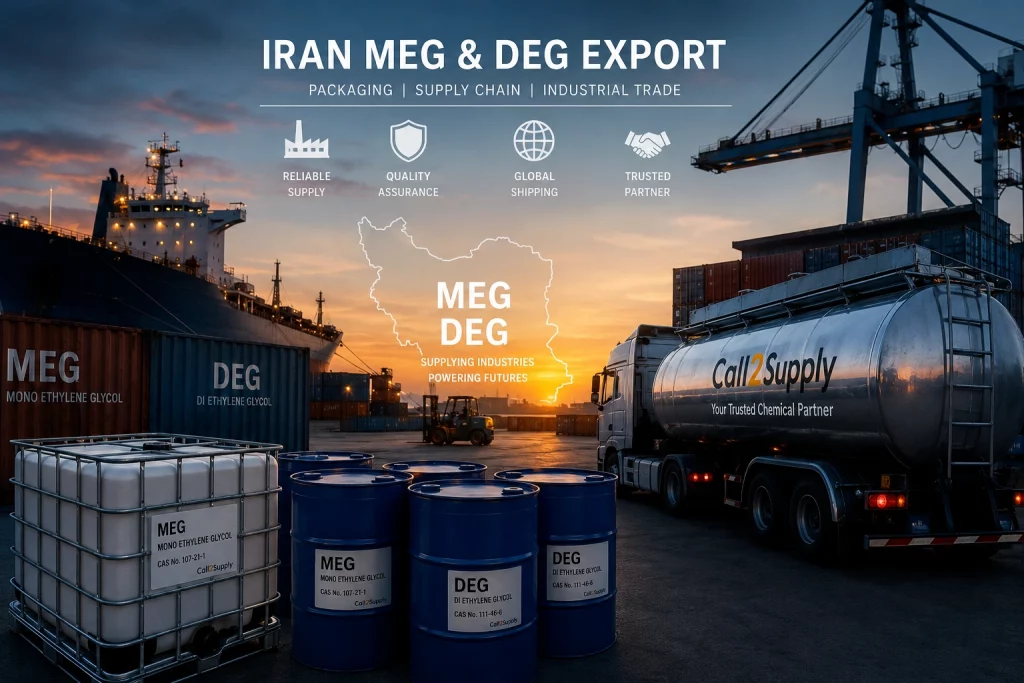
Iran DEG and MEG Export: Packaging, Supply Chain, and Industrial Trade Guide
The global glycol market continues to play a critical role in industrial manufacturing, chemical processing, polyester production, and downstream petrochemical industries. Among the most demanded glycol products in regional and international trade, Mono Ethylene Glycol (MEG) and Diethylene Glycol (DEG) remain essential materials for industrial buyers operating across Asia, the Middle East, Africa, and neighboring markets.
In recent years, Iran MEG and Iran DEG supply has gained stronger attention among international buyers due to the country’s large petrochemical production capacity, industrial infrastructure, and export-oriented supply chain capabilities. Buyers sourcing glycol products today are no longer focused solely on pricing. Reliable supply, shipment coordination, packaging flexibility, export documentation, and communication efficiency have become equally important in long-term procurement decisions.
At Call2Supply, glycol supply operations are coordinated through access to major Iranian petrochemical producers including Shazand Petrochemical Company, Marun Petrochemical Company, as well as several private petrochemical suppliers operating within Iran’s industrial chemical market.
This integrated sourcing structure allows flexible MEG and DEG export solutions for international buyers requiring industrial-volume shipments, organized packaging arrangements, and consistent supply coordination.
Why International Buyers Source Iran DEG and MEG
Iran has become one of the important regional suppliers in the glycol market due to its integrated petrochemical infrastructure and continuous industrial production capabilities. International buyers searching for an Iran glycol supplier are typically focused on operational reliability, shipment continuity, and long-term procurement stability rather than only short-term market pricing.
One of the strongest advantages of Iran MEG and Iran DEG supply is direct access to large petrochemical production facilities. Iran’s glycol production ecosystem is connected to established upstream petrochemical operations that support industrial-scale manufacturing and export availability.
Major producers including Shazand, and Marun continue to play a significant role in regional glycol supply chains. In addition to these large producers, several private petrochemical suppliers contribute to domestic market flexibility and export coordination capabilities.
For many international buyers, especially traders, distributors, and industrial manufacturers, supplier continuity is one of the most critical procurement factors. Buyers operating in polyester manufacturing, industrial chemicals, packaging materials, resins, or downstream processing industries require suppliers capable of maintaining stable shipment schedules and organized export execution.
Another reason international buyers continue sourcing from Iran is packaging flexibility. Different markets operate with different infrastructure limitations, storage systems, unloading capabilities, and transportation structures. A professional MEG supplier Iran or DEG supplier Iran must therefore be capable of arranging multiple shipment formats based on buyer requirements.
As global chemical logistics become increasingly volatile due to freight fluctuations, container shortages, and supply chain disruptions, buyers are prioritizing suppliers that can maintain responsive communication and organized shipment coordination throughout the export process.
Iran Glycol Supply Structure and Market Position
Iran’s petrochemical industry remains one of the largest industrial sectors in the region, supporting the production and export of various chemical and petrochemical products. Within this infrastructure, MEG and DEG continue to hold strong positions in regional trade due to consistent industrial demand and established export channels.
Unlike spot-market traders who rely solely on temporary market availability, structured glycol suppliers operate through coordinated sourcing from major producers and private petrochemical networks. This supply structure creates greater operational flexibility when arranging industrial-volume shipments for export buyers.
At Call2Supply, sourcing coordination is managed through cooperation with:
Major producers including Shazand, and Marun continue to play a significant role in regional glycol supply chains.
In addition to these large producers, several private petrochemical suppliers contribute to domestic market flexibility and export coordination capabilities.
👉 For a detailed breakdown of Iran’s MEG export volumes, key destination markets, and trade distribution, see our MEG Iran export overview:
https://call2supply.com/2026/01/06/iran-meg-export-overview/
This multi-source structure is important because industrial buyers typically prioritize supply continuity and operational flexibility. Dependence on a single producer can increase supply risks during maintenance periods, logistics interruptions, or market fluctuations.
A diversified sourcing structure helps maintain:
- stable shipment planning
- flexible cargo allocation
- continuous export coordination
- improved operational reliability
- faster response to buyer requirements
International glycol trade is increasingly driven by supply consistency and execution capability rather than basic product availability alone.
Industrial Packaging Options for MEG and DEG Export
Packaging is one of the most important operational elements in international glycol trade. Buyers sourcing MEG Iran or Iran DEG frequently select packaging structures based on unloading infrastructure, storage systems, internal handling capabilities, and inventory management requirements.
For industrial chemical shipments, packaging directly affects:
- transportation efficiency
- loading operations
- cargo handling
- warehouse management
- shipment flexibility
- operational safety
At Call2Supply, packaging arrangements are coordinated based on buyer volume, shipment structure, and export requirements.
PE Drum Packaging
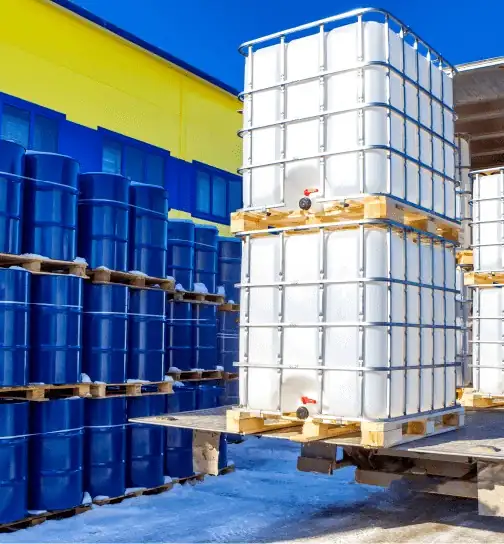
PE drum packaging remains one of the most common solutions in international glycol export operations. This format is widely used for buyers requiring manageable shipment volumes and operational flexibility during unloading and storage.
This packaging structure suitable for:
- smaller industrial shipments
- mixed container cargoes
- regional distributors
- flexible inventory management
- buyers with limited storage capacity
Drum packaging also simplifies cargo separation and handling at destination warehouses.
For many distributors and chemical trading companies, drum shipments provide greater operational convenience compared to large bulk cargoes.
IBC Containers
IBC containers are commonly selected by industrial buyers requiring more efficient handling and improved container utilization.
IBC packaging helps reduce:
- loading time
- unloading complexity
- handling requirements
- packaging waste
IBC shipments are widely preferred by medium-scale industrial buyers because they create a balance between shipment efficiency and storage flexibility.
For buyers operating continuous industrial consumption systems, IBC packaging often improves operational flow and warehouse organization.
Bulk Shipments
Bulk glycol shipments are generally arranged for large industrial consumers and long-term procurement operations.
Bulk supply structures are primarily suitable for:
- continuous manufacturing operations
- industrial-scale chemical consumption
- long-term procurement contracts
- large-volume trading operations
In international glycol trade, bulk cargo coordination requires accurate scheduling and organized communication between supplier, logistics operators, and destination receivers.
Shipment planning becomes increasingly important in bulk operations because industrial buyers often work according to strict production schedules and inventory timelines.
Supply Chain Coordination in International Glycol Trade
Modern chemical export operations depend heavily on supply chain organization and shipment coordination. In many cases, buyers evaluate suppliers based more on operational execution than on product specifications alone.
For industrial buyers sourcing from an Iran glycol supplier, reliable coordination is often one of the main decision-making factors.
MEG and DEG export operations involve multiple stages including:
- sourcing allocation
- packaging scheduling
- container coordination
- export documentation
- cargo planning
- shipment follow-up
- buyer communication
At Call2Supply, export coordination is structured around maintaining communication transparency and operational consistency throughout the shipment process.
One of the major challenges in global chemical trade is coordination between multiple operational parties. Delays in documentation, cargo scheduling, or shipment planning may create operational disruptions for industrial buyers and downstream manufacturers.
For this reason, buyers increasingly prioritize suppliers capable of:
- responding quickly
- maintaining shipment visibility
- coordinating packaging efficiently
- minimizing operational delays
- managing export procedures professionally
Reliable communication remains one of the strongest indicators of a professional MEG supplier Iran or DEG supplier Iran.
What Buyers Expect from a Professional MEG Supplier Iran
The international glycol market has become increasingly competitive, meaning buyers are more selective when evaluating suppliers.
Today, industrial customers typically expect far more than simple product availability.
Stable and Continuous Supply
Supply interruptions can create serious operational risks for manufacturers and industrial consumers. Buyers therefore prioritize suppliers capable of maintaining continuous shipment capability over multiple loading cycles.
Packaging Flexibility
Different industries and markets operate with different handling systems and unloading infrastructure. Flexible packaging options remain essential in export-oriented glycol trade.
Accurate Export Documentation
Export documentation accuracy is critical in international chemical shipments. Errors or inconsistencies may result in customs delays, additional operational costs, or cargo clearance complications.
Organized Shipment Planning
Industrial buyers usually operate according to production timelines and inventory schedules. Organized shipment coordination therefore becomes a key procurement factor.
Responsive Communication
Fast and transparent communication improves operational efficiency and helps minimize misunderstandings during export execution.
Long-term supply relationships in the petrochemical sector are generally built on consistency, organization, and reliability rather than short-term pricing alone.
Challenges in International Chemical Export Operations
Global chemical trade continues to face several operational challenges affecting both buyers and suppliers.
Freight market volatility remains one of the most common issues in international logistics. Shipping costs, container availability, and transportation schedules can fluctuate significantly depending on market conditions.
Another major challenge is operational coordination across multiple supply chain participants. Chemical export operations often involve suppliers, freight companies, warehouse operators, customs agents, and destination receivers simultaneously.
Documentation management also remains critically important. Incomplete or inaccurate paperwork can lead to shipment delays and operational disruptions.
Additionally, industrial buyers increasingly demand:
- faster response times
- flexible shipment structures
- adaptable loading schedules
- improved supply visibility
- reliable coordination
As global supply chains continue evolving, suppliers with organized operational structures gain stronger competitive positioning in international glycol markets.
How Call2Supply Supports International Glycol Buyers
At Call2Supply, export operations are structured around supply reliability, flexible packaging coordination, and organized shipment execution for international buyers.
Through cooperation with Shazand Petrochemical, Marun Petrochemical, and several private petrochemical suppliers, industrial-volume sourcing solutions can be coordinated based on buyer requirements and shipment structures.
Packaging options including:
- PE drums
- IBC containers
are arranged according to operational needs, cargo volume, and export planning requirements.
As international buyers continue prioritizing reliability and operational consistency, organized export coordination remains one of the most important elements in successful glycol procurement.
professional shipment execution and responsive supply coordination have become essential components of long-term industrial trade relationships.
Conclusion
Iran continues to maintain an important position in regional glycol trade due to its industrial petrochemical infrastructure, production capabilities, and export-oriented supply network.
In today’s market, international buyers sourcing Iran DEG and MEG Iran increasingly evaluate suppliers based on operational reliability, shipment coordination, packaging flexibility, and communication efficiency rather than product availability alone.
With coordinated sourcing through major producers including Jam, Shazand, Marun, and several private petrochemical suppliers, Call2Supply supports industrial buyers requiring organized glycol export solutions and professional supply coordination.
As global chemical supply chains become more competitive and operationally demanding, reliable execution and consistent export support will remain key factors in successful MEG and DEG trade.